
Dementia Action Week Spotlight: ReConnect at at Elmview
Dr Katie Paramore, Consultant and Clinical Lead in Old Age Psychiatry, Fife Health and Social Care Partnership, and Dementia Trust trustee:
Music has the power to move us all, but in Dementia it can have a unique ability to reach people in a way that nothing else can.
Increasing numbers of clinical studies are being undertaken to understand the effect that music can have on the brain. We see evidence that neurotransmitters such as Dopamine are released in response to music being played, with a positive impact on mood and anxiety. A reduction in the stress hormone, cortisol, is also seen, with further benefit on anxiety states. Neuroimaging studies suggest that the parts of the brain that process music are amongst the last to be impacted by the deterioration caused by Alzheimer's disease, and that playing and engaging with music may increase brain plasticity with the possibility of slowing progressive degenerative changes and even improving cognitive reserve.
Studies looking at the impact of engaging with music for people with dementia show a wide range of potential benefits, from reduction of stress and distress behaviours such as shouting and aggression, to improvement in verbal and non-verbal communication and increased access to autobiographical memory. This makes music a powerful non-pharmacological tool for improving quality of life for people at all stages of the condition.
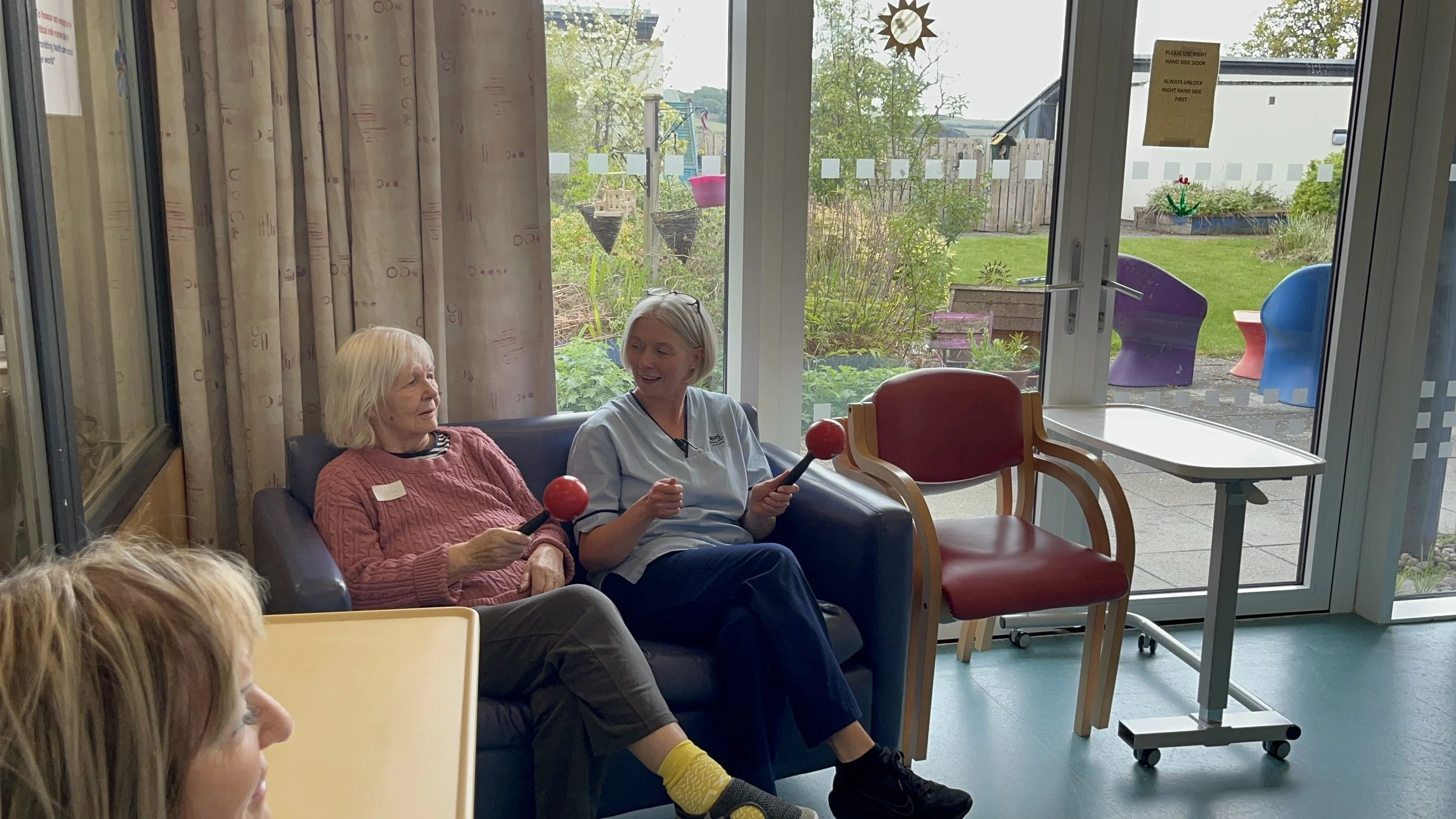
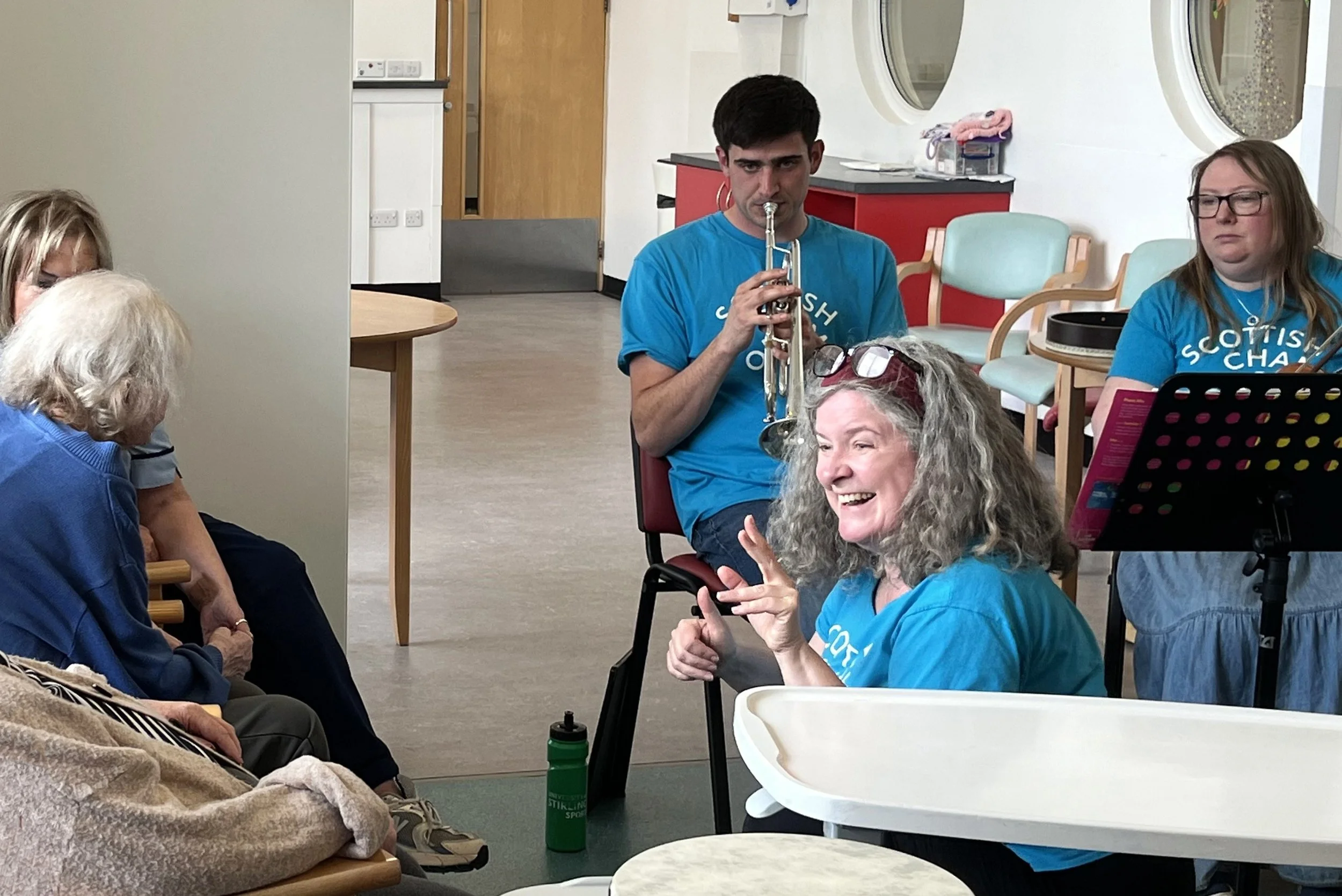
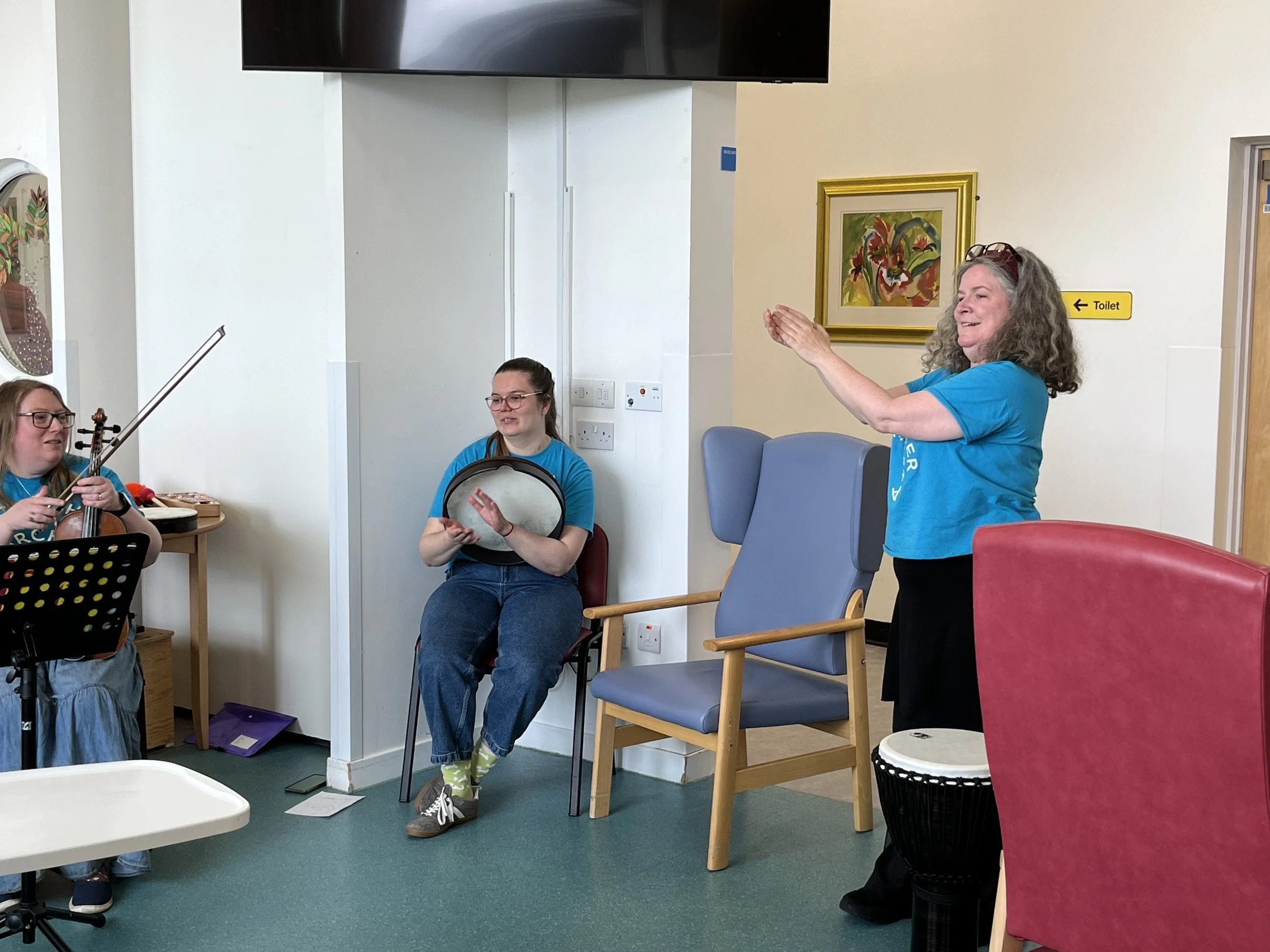
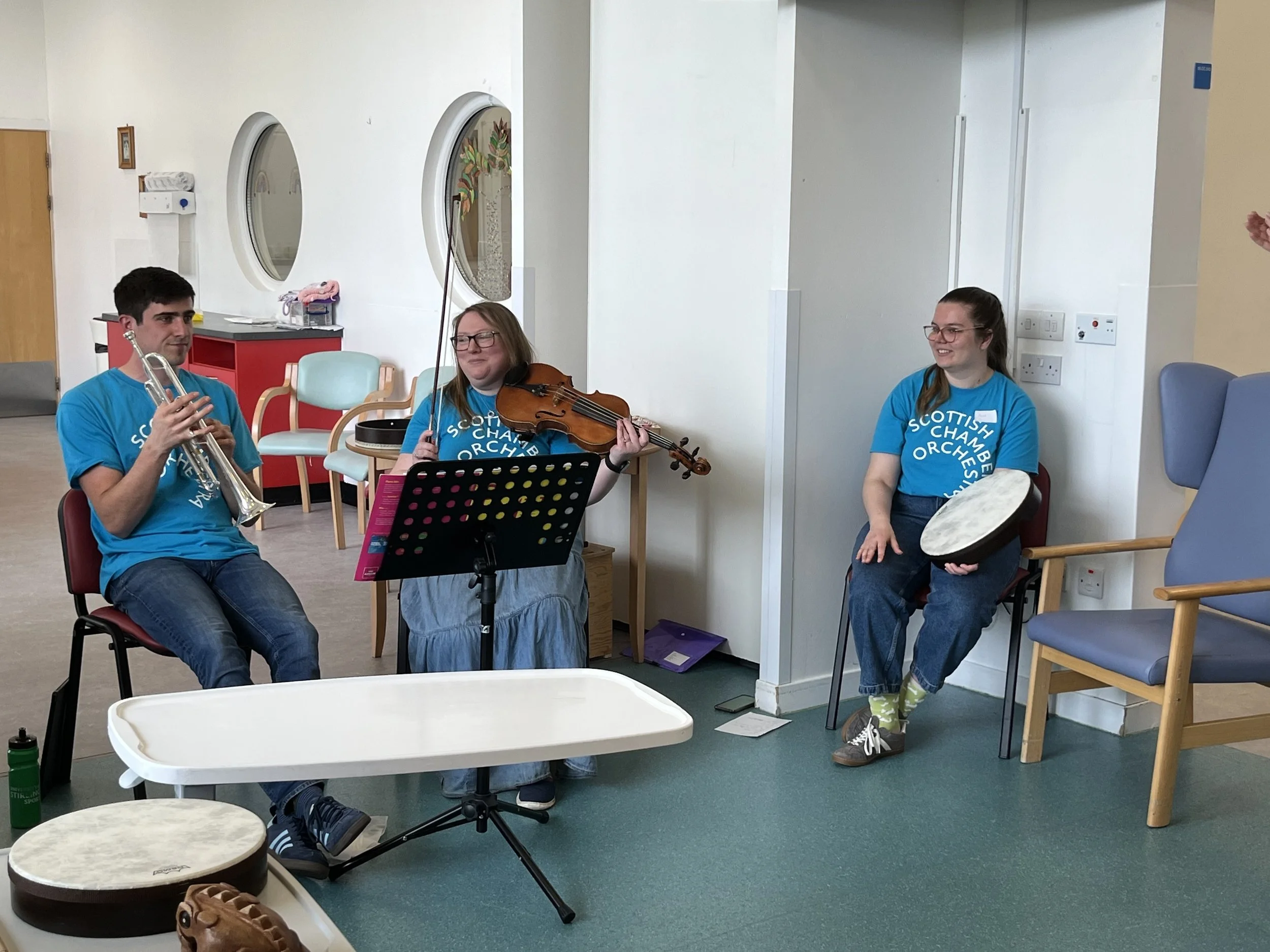
The Dementia Trust has recently been able to support a second project with the Scottish Chamber Orchestra, who are bringing their professional musicians into a specialist Older Adult Mental Health ward in Fife.Elmview ward provides care and treatment for up to 18 patients with complex needs associated with moderate and severe dementia. The SCO ReConnect project is bringing a series of eight weekly workshops with live instrumental music and active engagement being offered. The usually clinical environment has been ringing to the sounds of violins, cellos, trumpets and more with patients and their family members being encouraged to join in. A wide variety of music, from familiar songs to traditional Scottish melodies and well known classical tunes are accompanied by the sounds of different percussion instruments being rattled, banged and shaken with enthusiasm. There are feet tapping, hands waving and even the occasional outbreak of dancing as the sessions progress and faces become animated and lively.
This project, and music therapy like it, brings a tremendous uplift to what can, at times, be a challenging and chaotic environment. The opportunity for patients, their family, and ward staff to engage together in music making invokes a wide range of emotion, from joy and laughter to almost misty-eyed reminiscence. It can provide a chance for positive interactions and memories to be made in a condition that can take so much.
One member of staff commented:
"the chance to see him engaging with his wife in such a bright and happy way was a breath of fresh air".
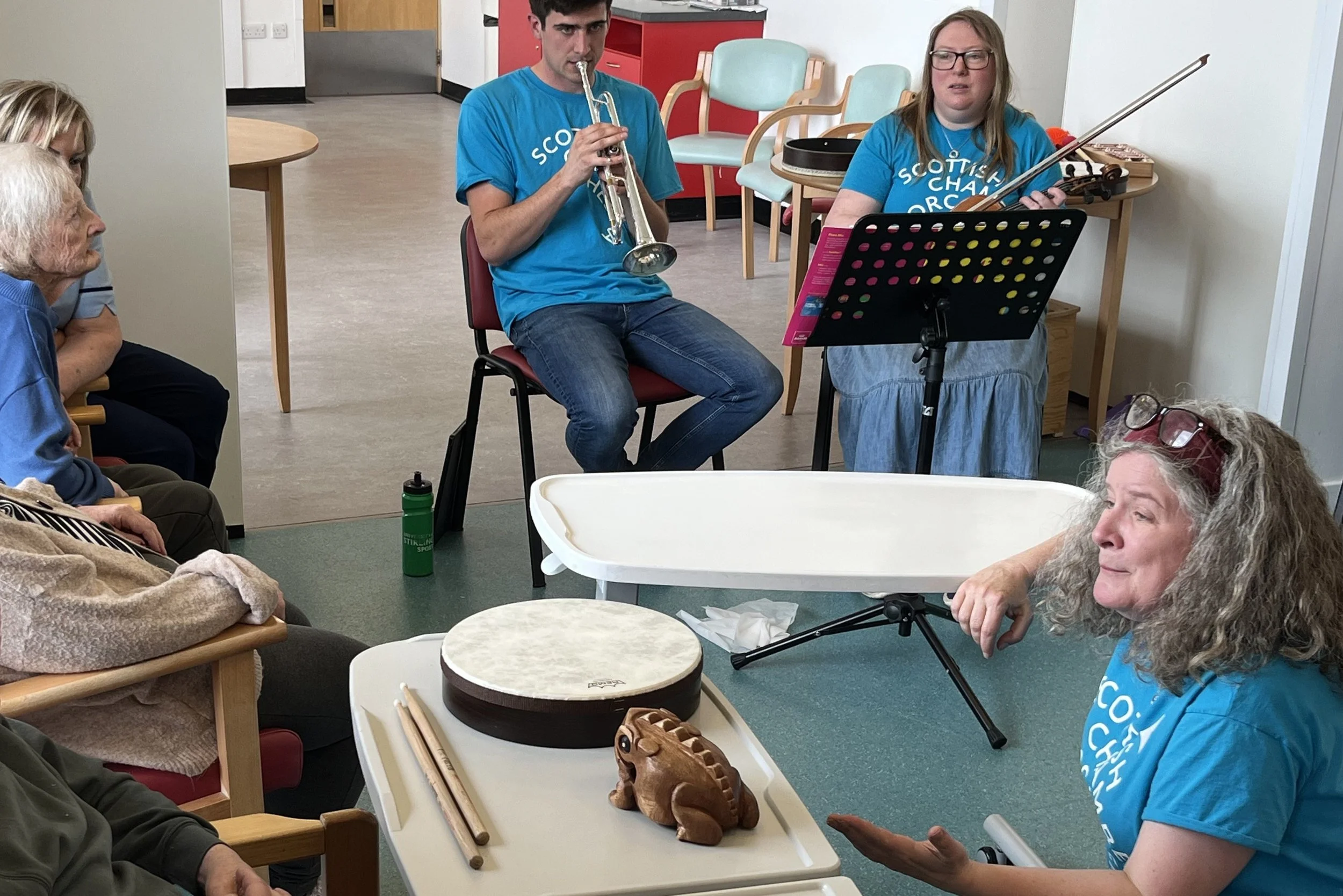
Projects like this not only provide a moving and invigorating experience during the sessions, but also leave long lasting memories of shared joy for those who are later left behind.