
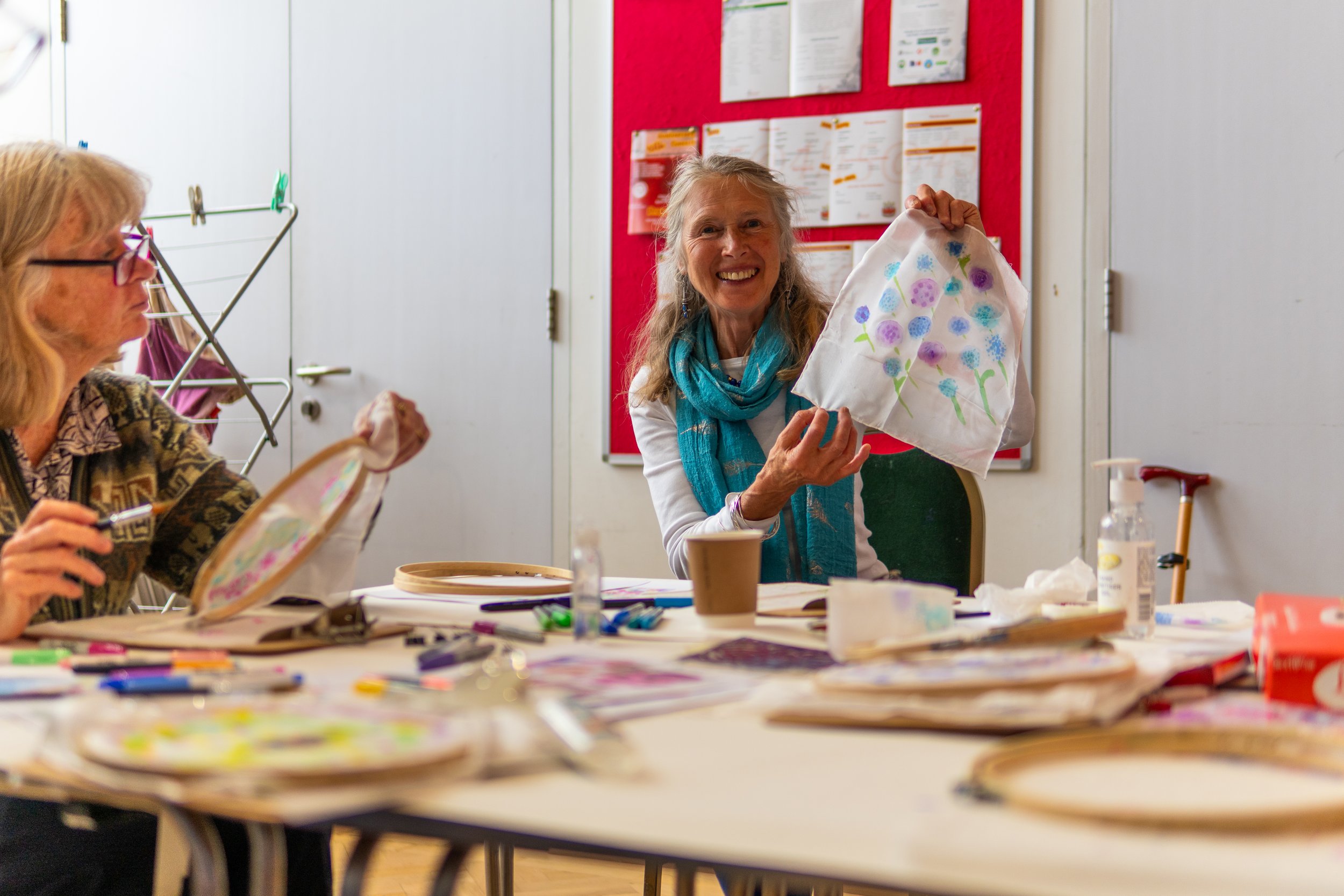
The Murdoch Grant supports grassroots projects, continuing Peter Murdoch’s commitment to turning new ideas into practical change.
In 1984, dementia was still largely talked about in the shadows. It was poorly understood and practical training was very limited. Families struggled as the needs of people living with dementia were rarely part of conversations about health and social care.
For Dr Peter Murdoch, a Consultant Physician in Geriatric Medicine, that had to change.
Peter was invited that year to represent the Royal College of Physicians of Edinburgh on Scottish Action on Dementia, a new organisation which had been established to raise the profile of dementia across Scotland. It was the beginning of a passion that would span more than four decades, and help lay the foundations for some of Scotland's most significant work in dementia care.
Peter was asked to convene the organisation's Education and Training Committee, bringing together patient representatives, professional bodies, universities and local authorities.

“Knowledge or practical training about dementia was very limited and there was a clear need to share information and encourage innovation in care” Peter recalls. Dementia, he says, was “only slowly emerging from the shadows”.
Peter later went on to chair a steering group that secured £25,000 in starter funding from Scottish Office ministers and sought expressions of interest from Scottish universities to establish a dedicated centre for dementia services.
In 1989, the Dementia Services Development Centre was established at the University of Stirling and was the first centre of its kind in the world.
The Dementia Services Development Trust, now known as the Dementia Trust, played a major role in supporting its development, eventually raising more than £1.5 million to build the Iris Murdoch Centre.
Peter became a Trustee of the Dementia Trust in 1988 and later served as its Chair from 1997 to 2003 alongside his 30 year tenure as a Consultant Physician with NHS Forth Valley and later as an Executive Director.
Over that time, Peter has watched dementia move from being poorly understood and overlooked to being recognised as a major challenge for today's society. He has also seen a genuine shift towards finding practical ways to improve everyday life for those who are diagnosed, as well as for their families and carers.
“I am very encouraged that the Trust's work has seemed to help change attitudes, helping people look at practical ways of improving the lives of those living with dementia, a catalyst for change,” he says.
The Murdoch Grant recognises Peter’s contribution by helping communities put practical ideas into action.
A recent addition to The Dementia Trust’s funding awards, the Murdoch Grant offers grants of up to £500 to small community groups, charities and local initiatives, including groups led by carers and people with lived experience of dementia. It supports ideas that could make a meaningful difference to people affected by dementia, whether by starting something new or strengthening an existing activity.

The first round of applications has now been completed, and the next round is open. Applications for this round close at 5pm on Friday 13 November 2026.
Speaking about the Murdoch Grant, Dylan Harper, Chair at The Dementia Trust, said:
“It is a small-scale approach that feels fitting for a man who firmly believes that change often happens by recognising what is missing and then doing something about it.
“The people best placed to identify what could make a difference are not always those with the biggest budgets or the most established funding presentations. It might be carers who have seen a gap in support or people living with dementia themself who know exactly what could make everyday life easier.”
For Peter, it is another step in a journey that began when dementia was still struggling to find a place in public conversation. “We need to continue to strive to better understand, enable, support and respect those most affected.” he said.
Much has changed since 1984. But there is certainly still work to do.
If your group has an idea that could make everyday life better for people living with dementia and their carers, we would love to hear from you.
Find out more about the Murdoch Grant and apply for the next round.